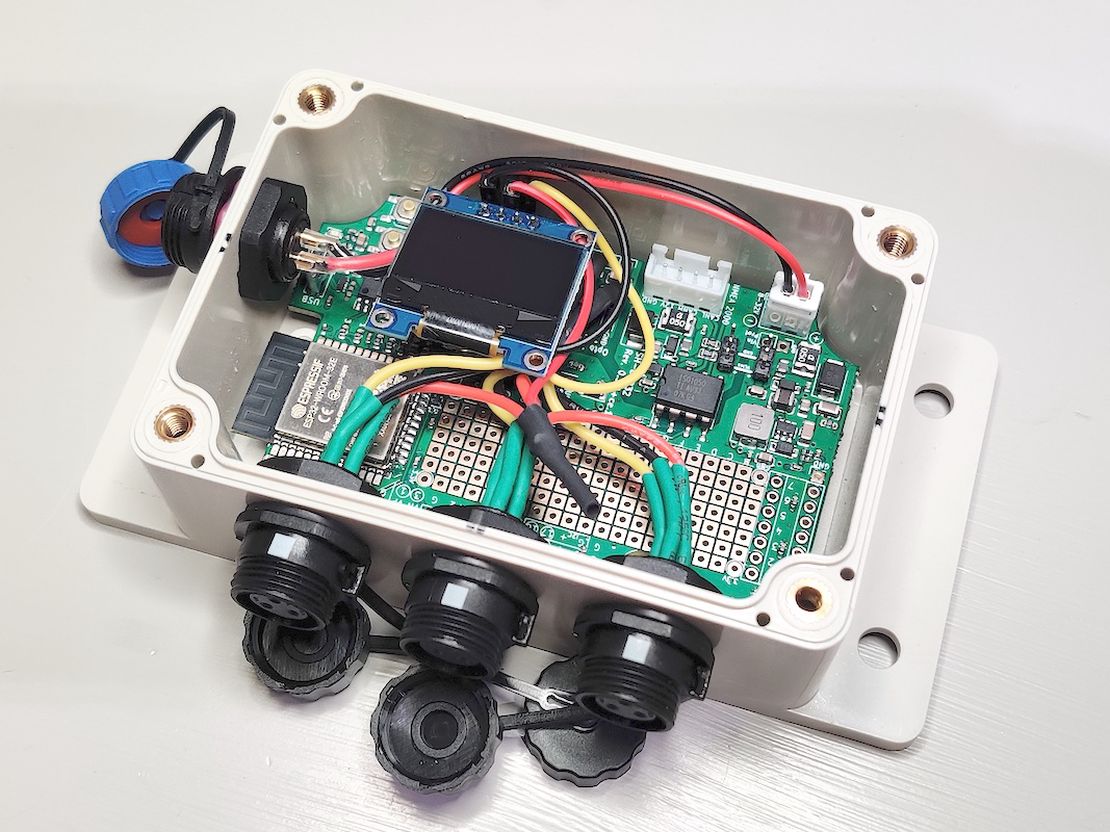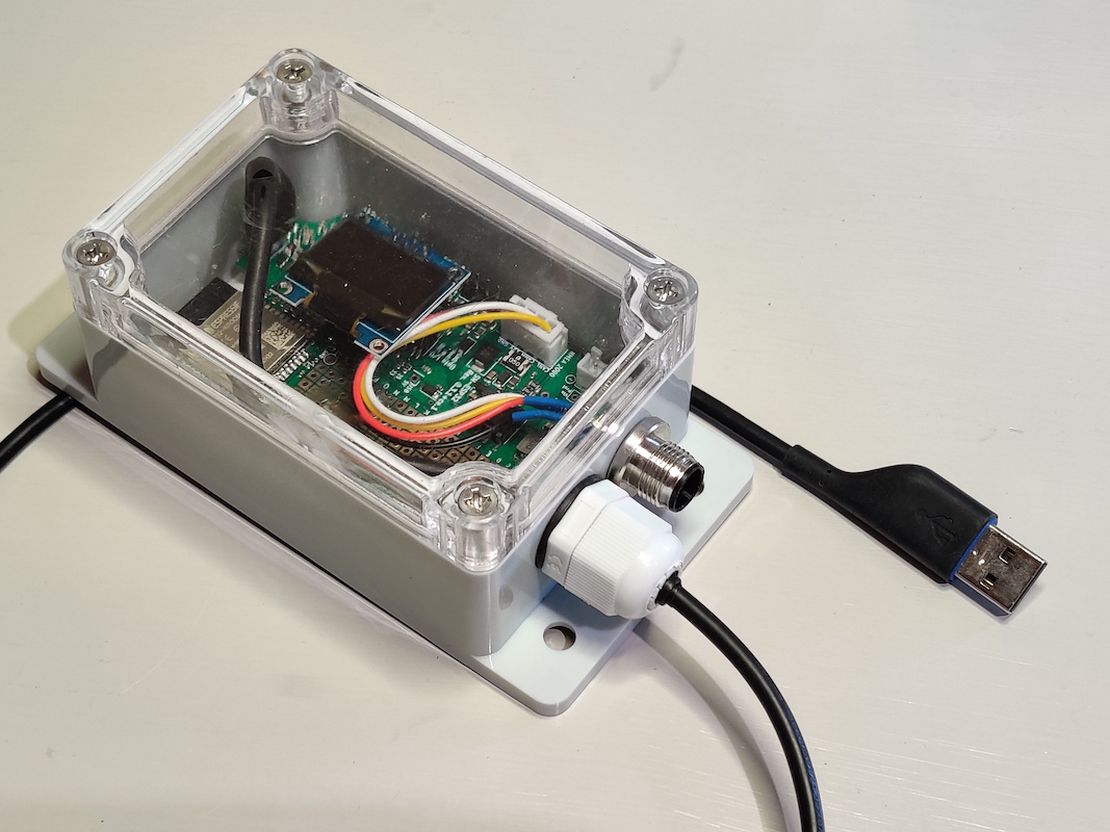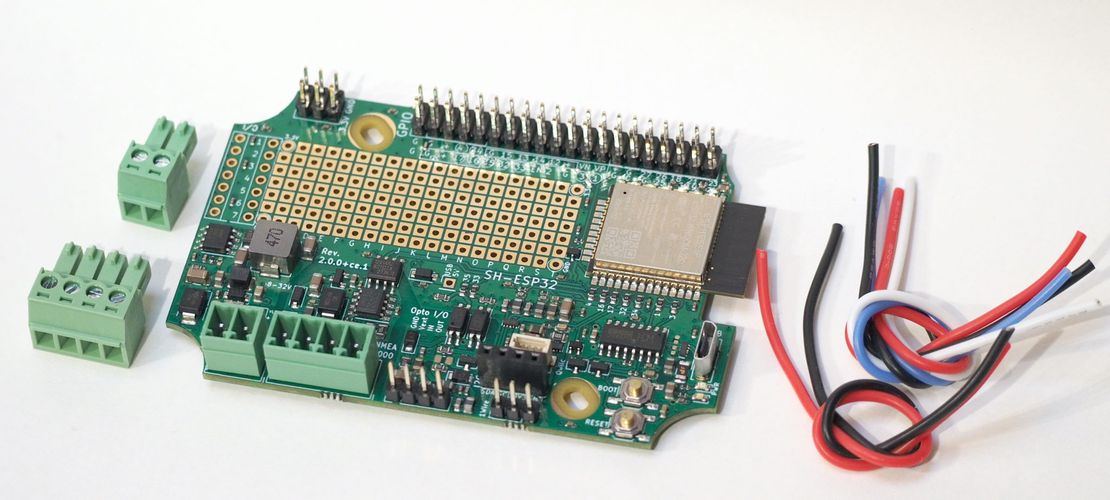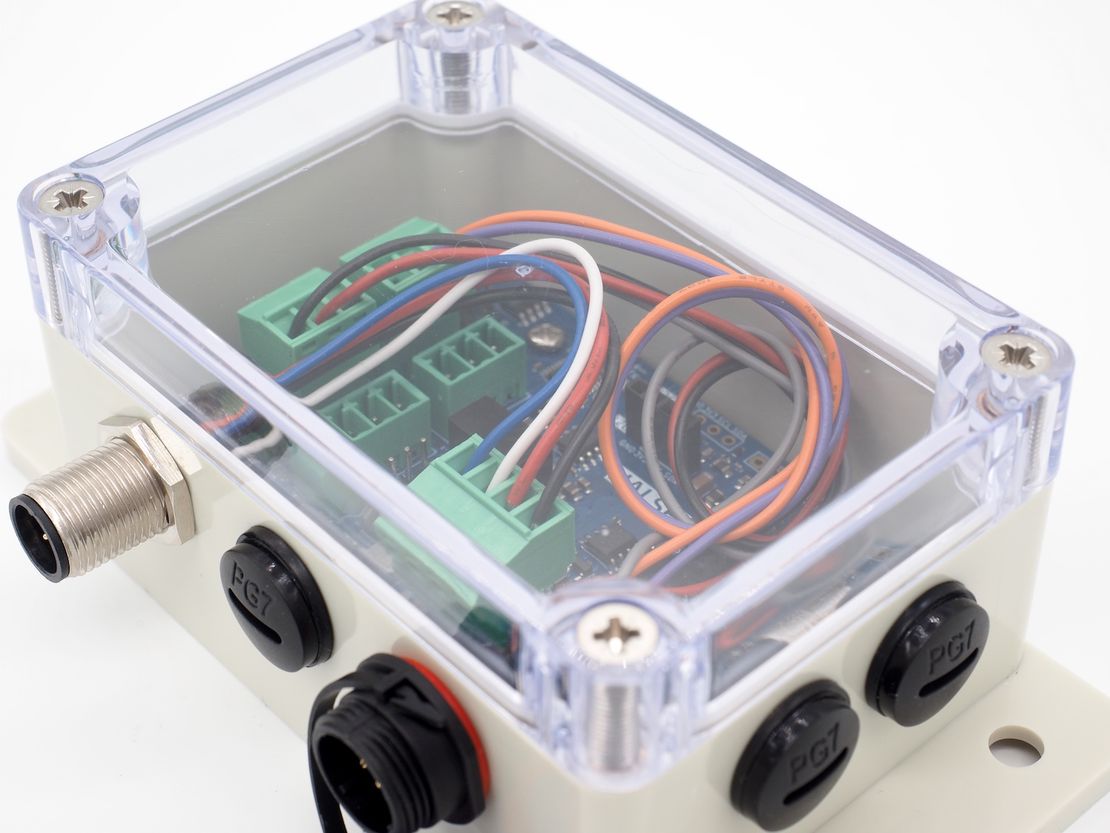
I’m happy to announce that HALSER, our new marine serial interface board, is now available and fully documented.
Many boats have legacy serial devices such as NMEA 0183 instruments, AIS transponders or wind sensors that don’t speak NMEA 2000 or WiFi natively. HALSER bridges that gap. It’s a small ESP32-C3-based board with RS-232, RS-485, and UART interfaces on one side and NMEA 2000 on the other, plus WiFi for Signal K connectivity. You write custom firmware using SensESP, which gives you a web UI, OTA updates, and Signal K integration out of the box. (Obviously, plain Arduino or ESP-IDF work perfectly fine as well.)
You can grab one from the Hat Labs online store, and the full documentation is at the HALSER documentation site.
Example Projects
To show what HALSER can do in practice, I’ve published two complete firmware projects as open-source reference implementations:
Wind Instrument Gateway: Connects an Autonnic A5120 ultrasonic wind instrument to NMEA 2000 and Signal K. Receives apparent wind data via NMEA 0183 and transmits PGN 130306 (Wind Data). Sensor parameters like reference angle and damping are configurable via the web UI.
AIS Transponder Gateway: Connects a Matsutec HA-102 AIS transponder to NMEA 2000 and Signal K. Decodes AIS messages (Class A/B position reports, static data, safety messages, Aids to Navigation) and forwards them as standard NMEA 2000 PGNs. You can configure the transponder’s MMSI, ship data, and voyage data through the web UI, and voyage static data settings such as the destination can even be set using Signal K deltas.
Both projects include full documentation and can serve as starting points for your own marine interface firmware. Have a look at the Custom Firmware Development page for more details on building your own.